
• Home
  • Mood Changes, Anxiety & Irritabilit

SYMPTOMS & COGNITIVE HEALTH

Mood Changes, Anxiety & Irritability

You snap at your partner over something small and feel immediate shame. You cry at a commercial. You feel a low-level anxiety you can’t explain. You feel irritable, on edge, or emotionally raw in ways that don’t feel like you.Many women in perimenopause experience mood-related symptoms that are distressing, confusing, and often attributed to stress, personality, or “just getting older.” But for a significant number of women, these shifts have a biological driver: changing hormone levels.At Alpenaura Holistic Health in Bend, Oregon, we take mood symptoms seriously as part of the hormonal picture — without dismissing them and without over-pathologizing what may be a treatable physiological process.
UNDERSTANDING MOOD CHANGES

Mood Changes, Anxiety & Irritability

Many women in perimenopause experience mood-related symptoms that are distressing, confusing, and often attributed to stress, personality, or “just getting older.” But for a significant number of women, these shifts have a biological driver: changing hormone levels.
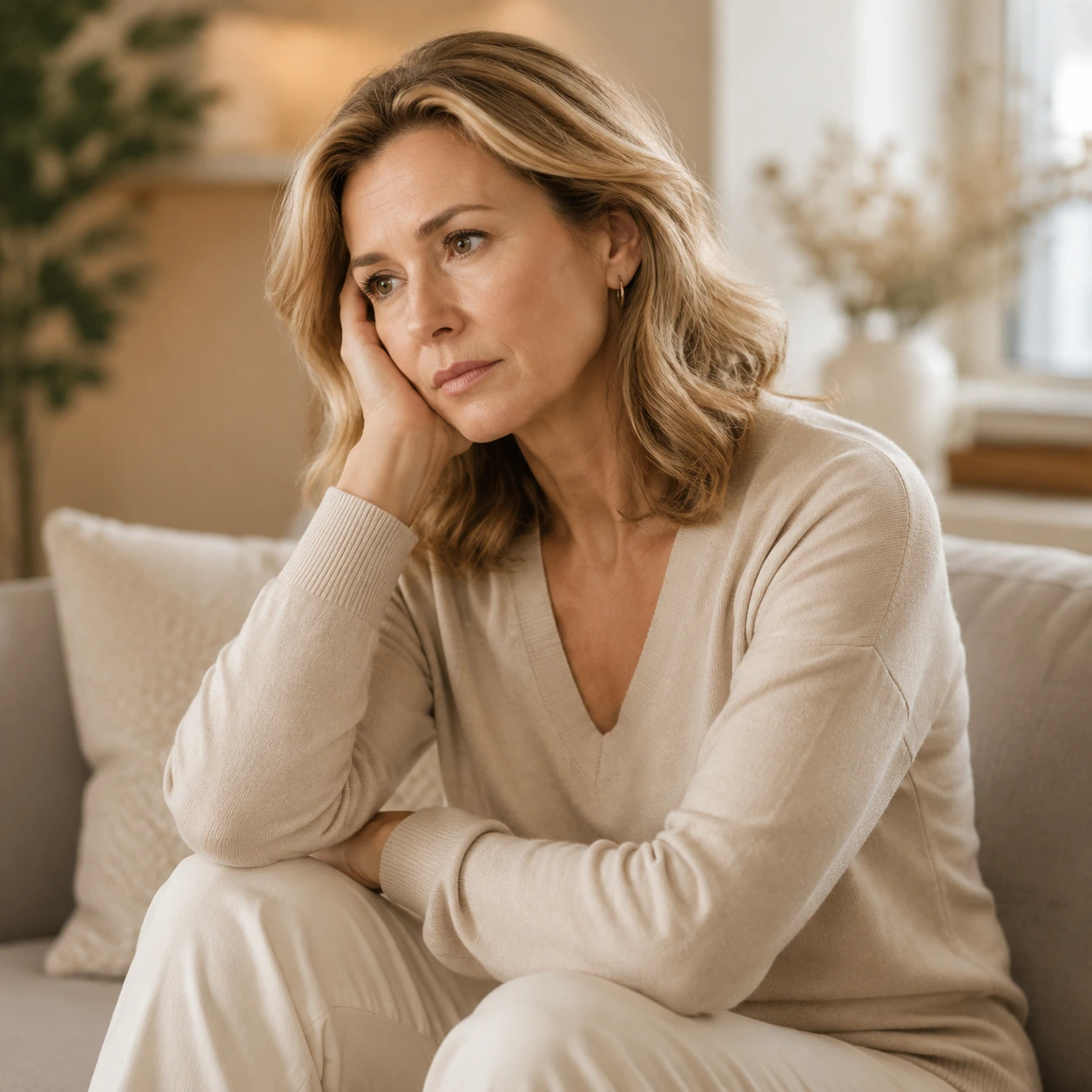
Mood Changes, Anxiety & Irritability

The Hormone-Mood Connection

Estrogen and progesterone have significant effects on the brain’s mood-regulating systems. Estrogen influences serotonin, dopamine, and norepinephrine activity. Progesterone has calming, GABA-like properties that support emotional regulation and sleep. As these hormones fluctuate unpredictably during perimenopause, mood instability often follows.
Common mood-related experiences during perimenopause include:

  • Irritability or a shortened fuse, often disproportionate to the trigger
  • Anxiety, worry, or a generalized sense of dread that is new or worsened
  • Emotional reactivity — crying more easily, feeling more sensitive
  • Low mood or depressive symptoms, particularly in the week before a period or during hormonal dips
  • Rage or anger that feels out of character
  • Emotional numbness or feeling disconnected
  • PMDD-like symptoms becoming more pronounced or appearing for the first time
LEARN MORE ABOUT HORMONE HEALTH
The Hormone-Mood Connection

When It’s More Than Just Hormones

Hormones are not always the primary driver of mood symptoms, and it is important to evaluate the full picture. Sleep deprivation, chronic stress, thyroid dysfunction, nutritional gaps, significant life stressors, and underlying mood disorders can all contribute independently or alongside hormonal changes.We work to understand the full context before attributing mood symptoms to hormones alone — and we refer to mental health colleagues when appropriate support goes beyond what hormonal care can address.


SCHEDULE CONSULTATION
When It’s More Than Just Hormones

What Care May Look Like

  • Hormone evaluation and BHRT when mood symptoms are clearly hormone-linked
  • Progesterone support specifically, which can have meaningful calming effects
  • Thyroid evaluation and optimization
  • Sleep support — poor sleep is a powerful mood destabilizer
  • Nutritional assessment (B vitamins, magnesium, omega-3s)
  • Stress physiology education and nervous system support strategies
  • Antidepressants or anti-anxiety medications when clinically appropriate
  • Referral to therapy or psychiatry when indicated
START A PERSONALIZED PLAN
What Care May Look Like
FREQUENTLY ASKED QUESTIONS

Questions, Answered With Care

We understand that mood changes, anxiety, and irritability can feel confusing and difficult to explain. Here are answers to common questions about perimenopause-related mood symptoms and personalized care.

Not always. Perimenopausal mood symptoms often fluctuate with hormone levels and may improve with hormonal support in ways that classic depression does not. That said, some women develop true clinical depression during this transition and benefit from antidepressant therapy, psychotherapy, or both. We assess the picture carefully and treat accordingly.

For many women, yes. When mood symptoms are clearly hormone-driven — tied to the menstrual cycle, worsening during hormone dips, or part of a broader perimenopause symptom picture — estrogen and progesterone support can have a meaningful positive effect on emotional stability. It is not guaranteed, and it is not the right fit for everyone, but it is an important option to discuss.

Often the shift is recognizable: anxiety that is more frequent, harder to manage, or less responsive to your usual coping strategies. It may also come alongside other perimenopausal symptoms like sleep disruption, hot flashes, or cycle changes. If it feels different from your baseline, it is worth evaluating.

No. Effective, evidence-based treatments exist for hot flashes and night sweats — both hormonal and non-hormonal. Many women experience dramatic improvement within weeks of starting appropriate care.

RELATED PROCEDURES

Support Your Wellness With Personalized Holistic Care

Explore related holistic health services designed to support hormones, metabolism, women’s health, lifestyle balance, and long-term wellness.

Women’s Health

Comprehensive care designed to support every stage of a woman's life, from hormonal balance to long-term wellness.

Hormone Health & BHRT

Restore balance, improve energy, and enhance overall vitality with personalized hormone optimization.

Metabolic Health & Medical Weight Loss

Comprehensive care designed to support every stage of a woman's life, from hormonal balance to long-term wellness.

Integrative Health Plan

Restore balance, improve energy, and enhance overall vitality with personalized hormone optimization.

YOUR TRANSFORMATION STARTS HERE

Ready To Look
And Feel Your Best ?

Experience personalized plastic surgery and aesthetic care designed to enhance confidence with natural, refined results.