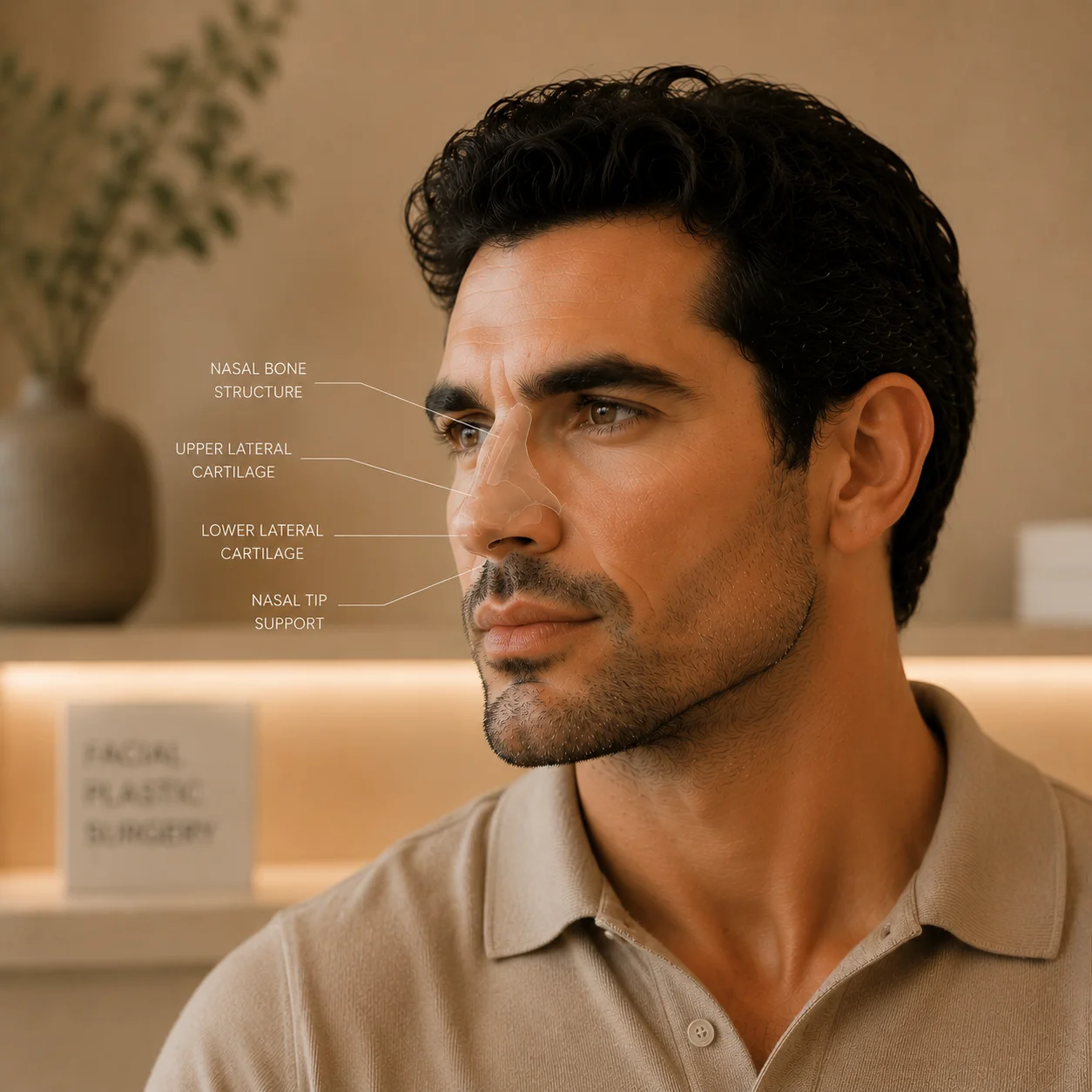
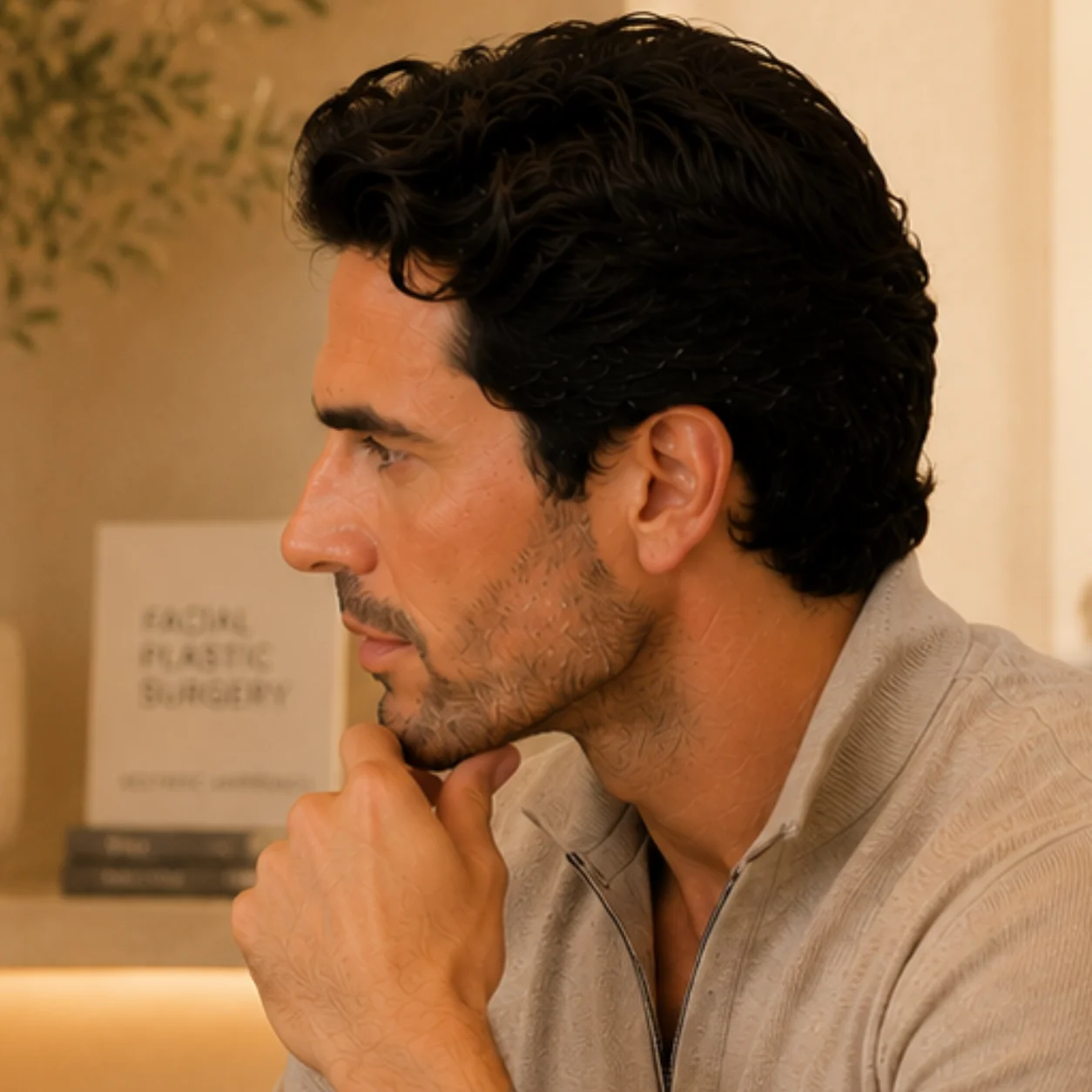
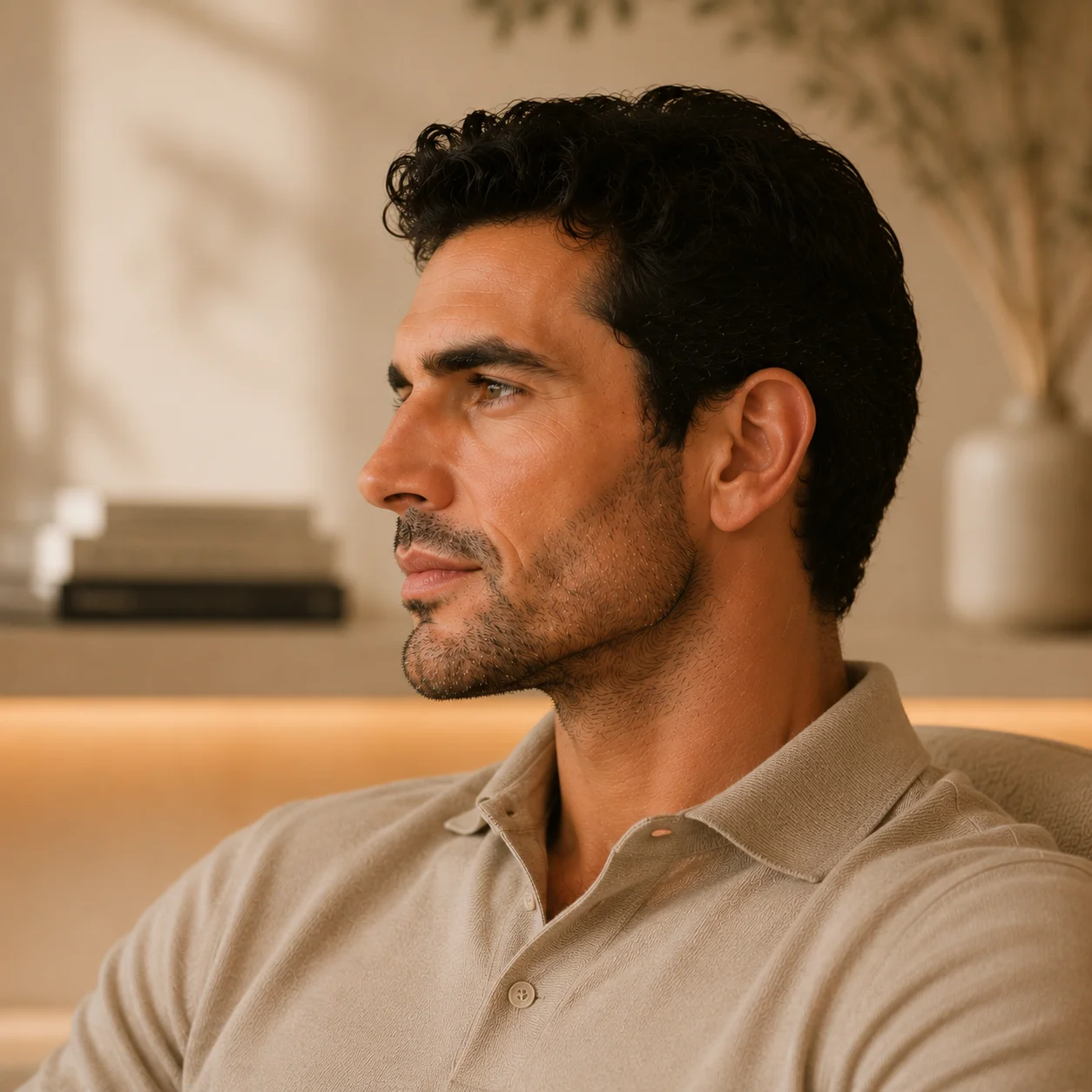
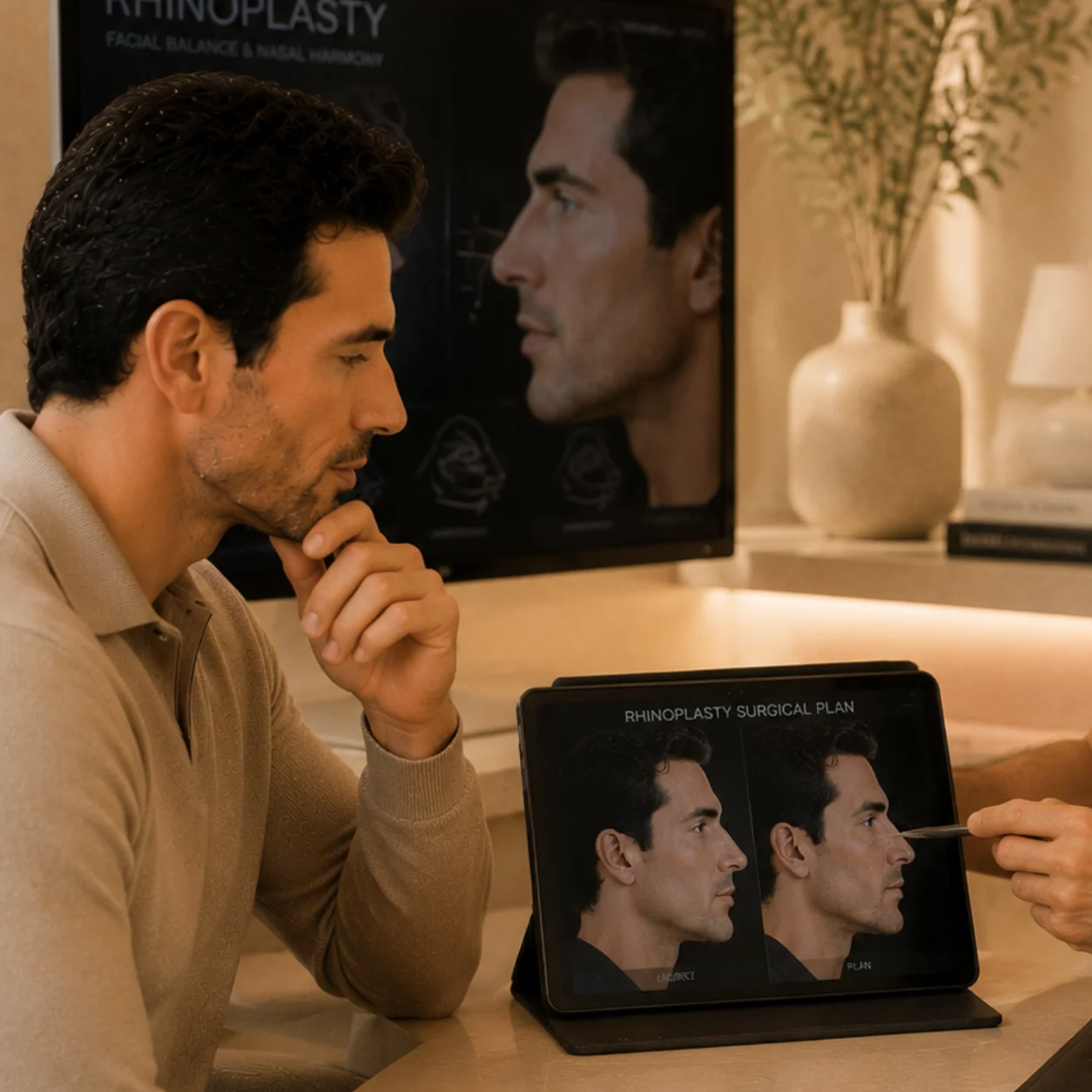
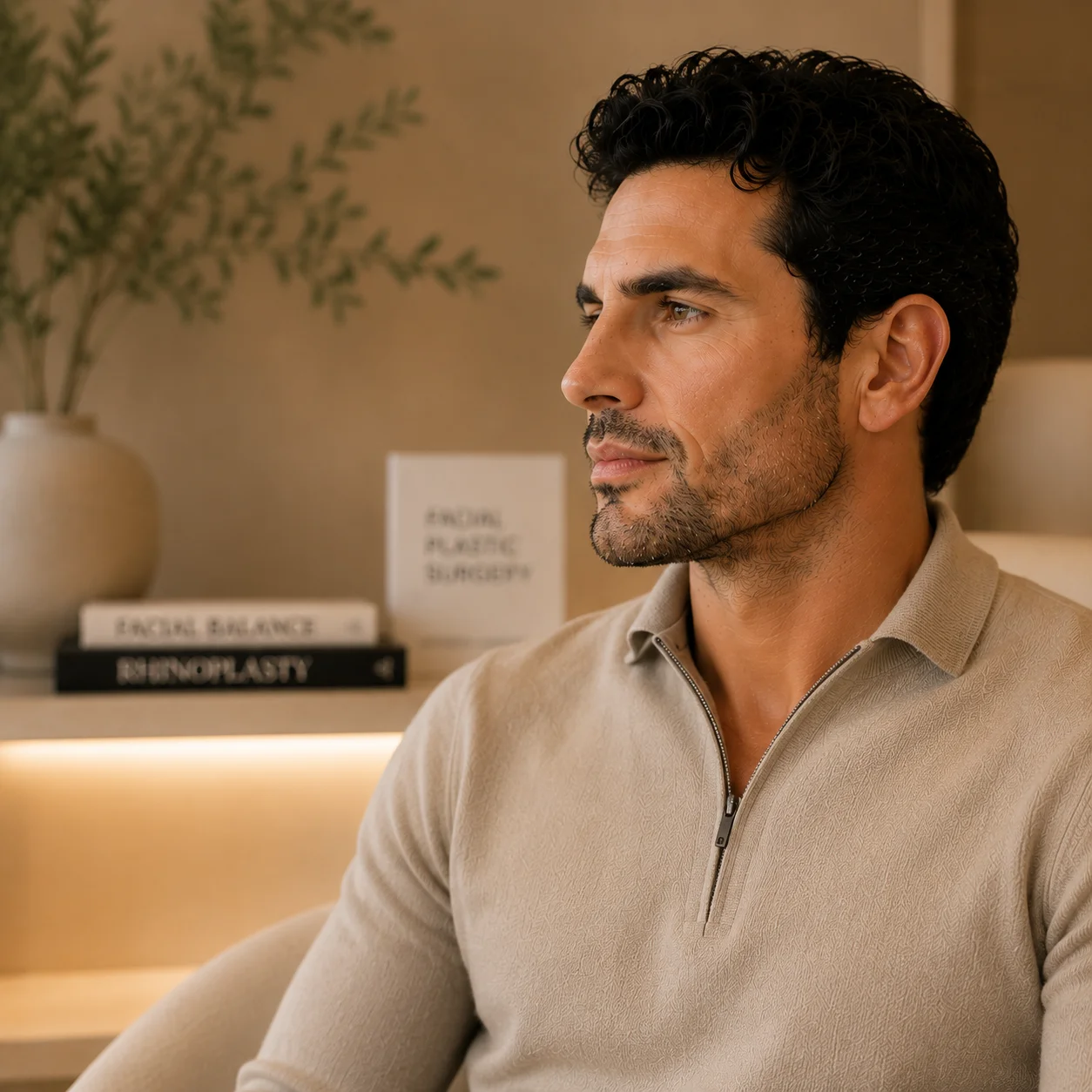
Male rhinoplasty requires a different aesthetic framework than female rhinoplasty. The goals for most male patients center on proportion, strength, and naturalness rather than the subtle feminizing refinements that characterize many female rhinoplasty results. A well-executed male rhinoplasty reduces what is bothersome — a dorsal hump, a wide or bulbous tip, a deviated or asymmetric bridge — without erasing the structural character of the nose or producing a result that reads as delicate. Preserving an appropriate dorsal height, maintaining tip projection and definition, and respecting ethnic facial features are all central to planning male rhinoplasty well.
Good candidates are healthy adult men with fully developed facial growth — typically by their late teens — who have specific and realistic concerns about the appearance or function of their nose. Men with breathing problems alongside cosmetic concerns often benefit from combining functional rhinoplasty and septoplasty in a single procedure, which can also support partial insurance coverage of the functional component.
The Pacific Northwest’s active, image-conscious culture means that many men in Bend, Redmond, and across the region have given significant thought to facial balance and proportion. Physique athletes know that the face is part of the overall picture on stage and on camera. Professionals value a polished, proportionate appearance. Athletes dealing with prior nasal trauma want to correct lasting functional and cosmetic consequences. Dr. Carboy brings a careful, conservative approach to male rhinoplasty that prioritizes natural results over dramatic change.
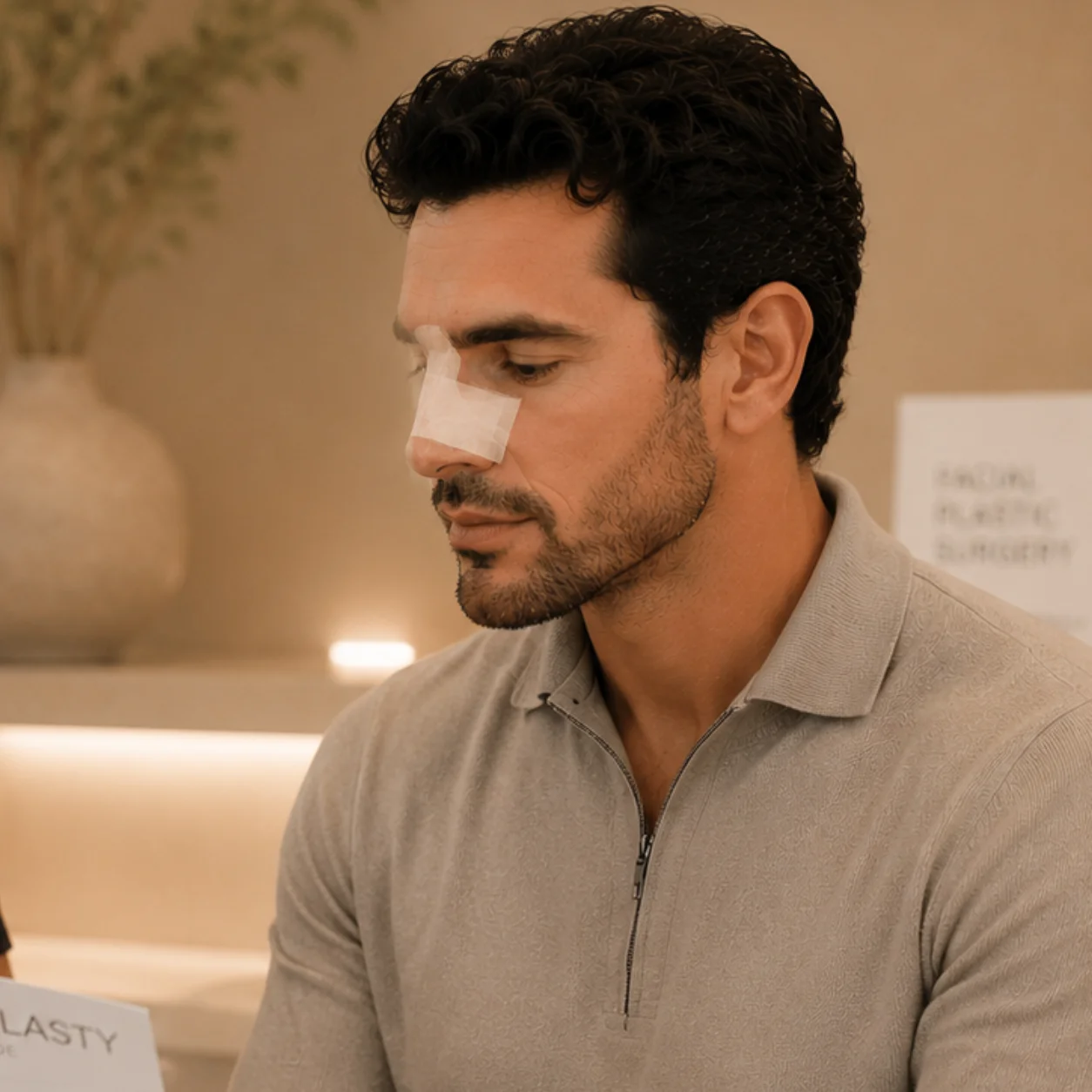
Male rhinoplasty is performed under general anesthesia as an outpatient procedure. Most patients wear a small nasal splint for approximately one week after surgery. Bruising and swelling around the eyes typically resolve within ten to fourteen days, and most patients feel comfortable returning to work and social settings around that time. Heavy lifting and any activity that substantially elevates blood pressure to the face is restricted for three to four weeks. Final results develop over one year or more as residual swelling settles, particularly in the tip.
Good candidates are healthy adult men with fully developed facial growth — typically by their late teens — who have specific and realistic concerns about the appearance or function of their nose. Men with breathing problems alongside cosmetic concerns often benefit from combining functional rhinoplasty and septoplasty in a single procedure, which can also support partial insurance coverage of the functional component.
Male rhinoplasty is performed under general anesthesia as an outpatient procedure. The goals for most male patients center on proportion, strength, and naturalness rather than the subtle feminizing refinements that characterize many female rhinoplasty results.
Most patients wear a small nasal splint for approximately one week after surgery. Bruising and swelling around the eyes typically resolve within ten to fourteen days, and most patients feel comfortable returning to work and social settings around that time. Heavy lifting and any activity that substantially elevates blood pressure to the face is restricted for three to four weeks.
Final results develop over one year or more as residual swelling settles, particularly in the tip. The goal is a nose that looks like it always fit your face, not one that announces itself as surgically altered.
The average procedure time varies based on your personalized treatment plan and the complexity of the procedure performed
Most patients are able to return to light daily activities within a short recovery period while healing continues gradually over time
Your follow-up appointments are designed to monitor healing, support, recovery, and ensure your results continue progressing naturally.
The location of your procedure is determined vary based on your personalized needs and the complexity of the procedure performed
We understand that choosing a procedure is a deeply personal decision. Here are answers to some of the most common questions about treatment, recovery, results, and the overall Alpenaura experience.
Male and female rhinoplasty share the same technical foundation but differ in aesthetic goals. Male rhinoplasty generally aims to preserve or enhance structural character — a defined bridge, appropriate dorsal height, strong tip projection — rather than the softer, more refined proportions often sought in female rhinoplasty. The planning conversation is different, and the definition of a natural result is different. Dr. Carboy explicitly addresses male aesthetic goals during consultation.
Not when planned and executed with restraint and an understanding of male facial aesthetics. The goal is a nose that looks like it always fit your face, not one that announces itself as surgically altered. Digital imaging during consultation helps set shared expectations before surgery.
Yes. Septoplasty and internal valve repair can correct the structural causes of chronic nasal obstruction, including a deviated septum, turbinate hypertrophy, and internal valve collapse. Many male patients benefit from combining functional and cosmetic goals in a single operation.
The splint and the bulk of visible bruising resolve in one to two weeks. Most patients are comfortable in social and professional settings by two weeks. Strenuous exercise and heavy lifting are restricted for three to four weeks. Tip swelling in particular resolves slowly over twelve months or more, though the nose looks quite good well before then.
Revision rhinoplasty addresses an unsatisfactory result from a prior rhinoplasty performed elsewhere. Common concerns include a residual hump, over-resected tip, persistent asymmetry, breathing problems, or an unnatural appearance. Revision surgery is technically more complex than primary rhinoplasty and benefits from a surgeon experienced in revision cases.
Cost depends on the complexity of the procedure, whether functional work is included, anesthesia fees, and facility fees. A detailed quote will be provided during your consultation. Functional components such as septoplasty may be partially covered by insurance.
Otoplasty reshapes and repositions the ears for a more balanced and natural appearance.
Thoughtful facial reconstruction after skin cancer removal with an emphasis on form, function, and natural-looking healing.
Facial feminization surgery tailored to soften facial features and support natural, affirming results.
Experience personalized plastic surgery and aesthetic care designed to enhance confidence with natural, refined results.