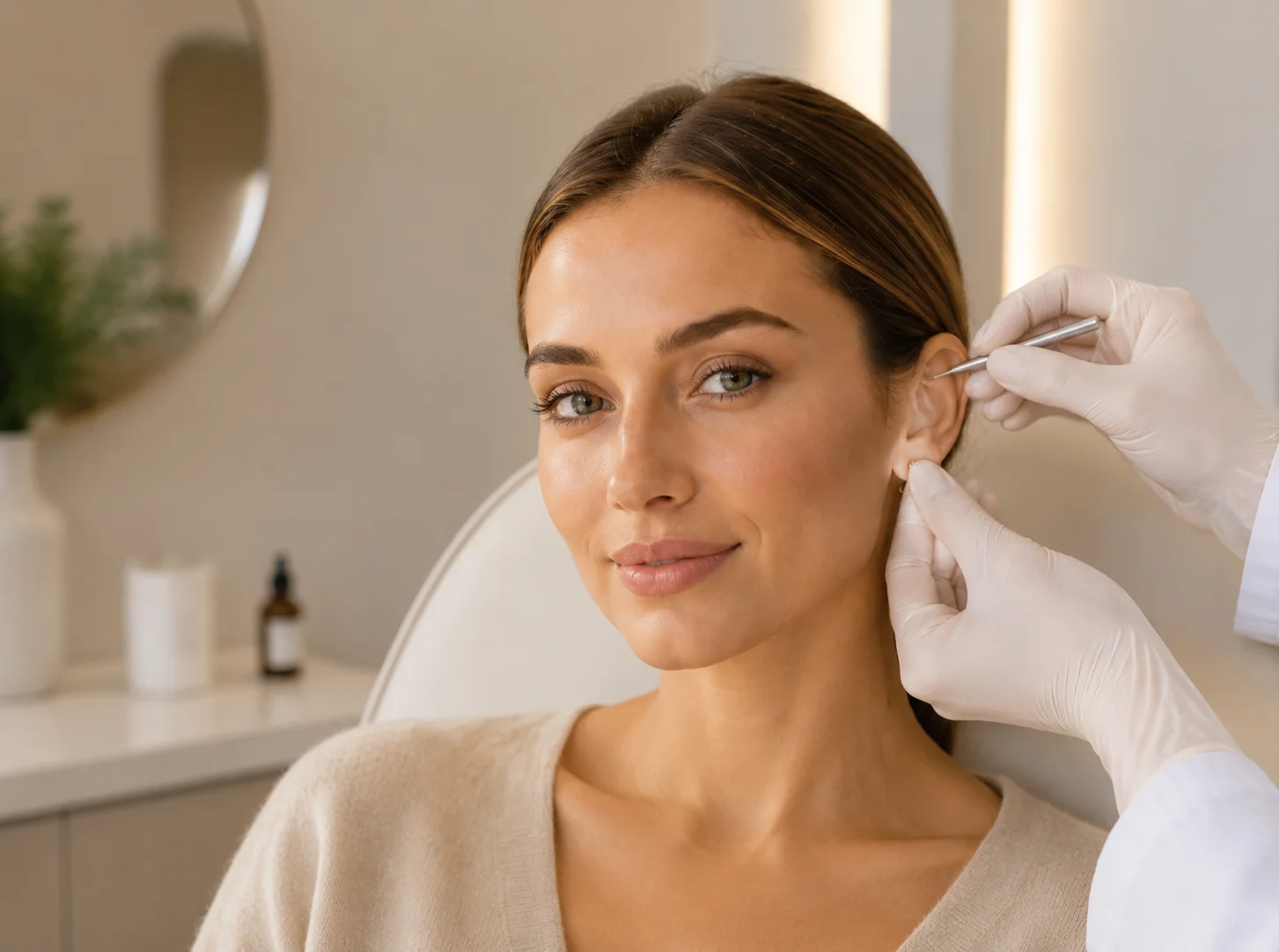





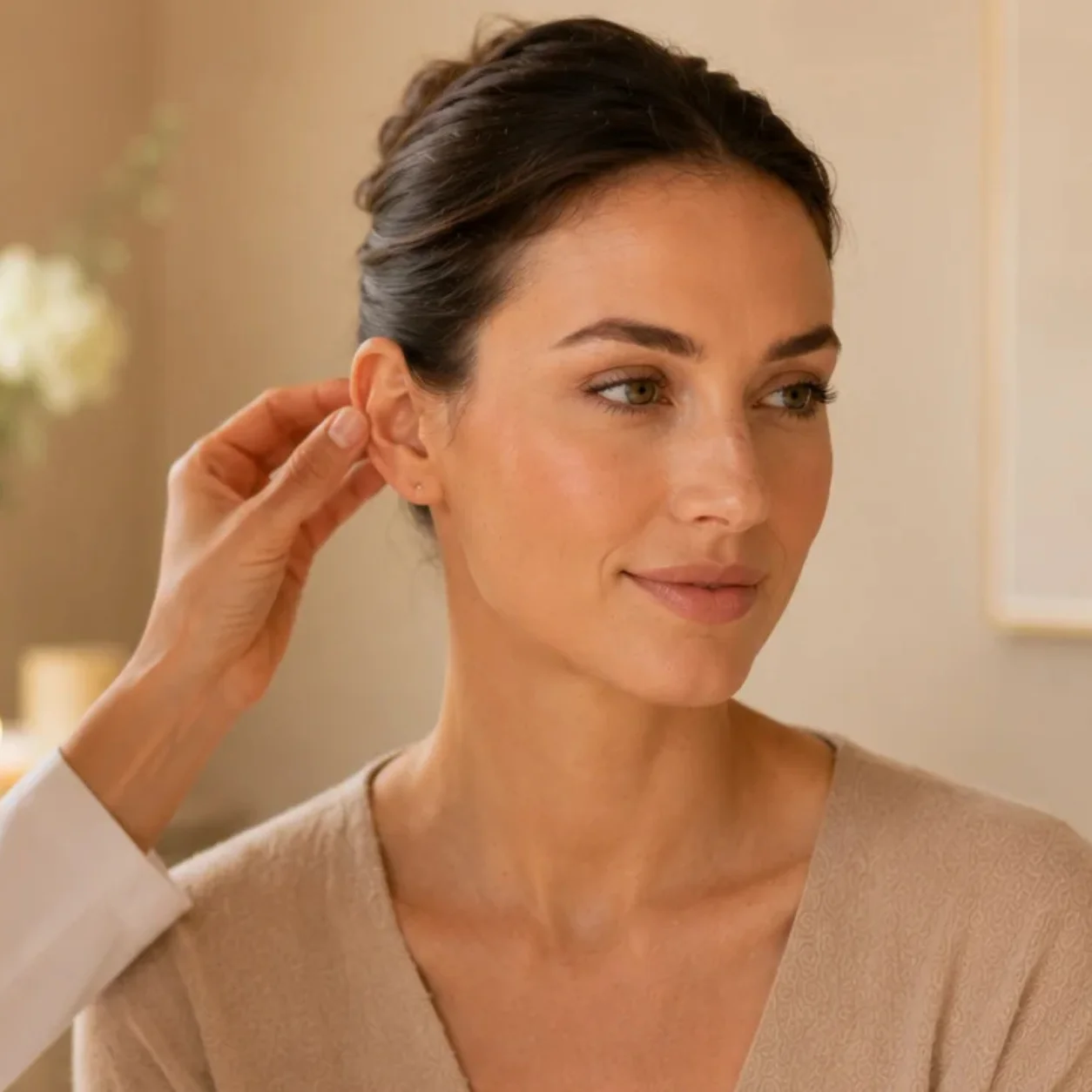





For many patients, otoplasty is a quietly transformative procedure that resolves a lifelong source of self-consciousness.Prominent ears are usually the result of genetics, with the ear cartilage failing to fold properly during development. Other patients have asymmetric ears, oversized earlobes, or deformities from injury or torn earlobes.
Otoplasty addresses these concerns by reshaping the cartilage, repositioning the ear closer to the head, and refining the overall contour. The goal is not to create an ear of any particular shape, but rather to make the ears recede visually so they no longer draw attention. After surgery, most patients feel that they can wear their hair however they like without thinking about it.
Otoplasty can be safely performed on children as young as five or six years old, once ear development is largely complete. Many parents in Central Oregon choose this timing to address prominent ears before their child experiences teasing in school. Adult candidates include healthy individuals who have always been bothered by their ear shape or position, or who have experienced ear trauma, including stretched or torn earlobes from gauges or earrings. Good candidates are healthy non-smokers with realistic expectations.
Patients across Bend, Redmond, Sisters, Sunriver, and the broader Pacific Northwest seek otoplasty for both their children and themselves. For children, the procedure is often performed before middle school to prevent social difficulties. Adults often pursue otoplasty after a lifetime of avoiding short haircuts, ponytails, or up-dos. Earlobe repair is another common request, particularly for patients who have stretched or torn earlobes from heavy earrings, earring trauma, or previous gauging.
Otoplasty is usually performed in the office under local anesthesia with sedation, or under general anesthesia in younger children. The incisions are hidden in the natural crease behind the ear, where they heal as nearly invisible lines. After surgery, patients wear a soft head wrap for several days followed by a headband at night for several weeks to protect the ears during healing. Most adults return to work within five to seven days, and most children return to school within a week. Strenuous activity is restricted for three to four weeks.
Good candidates are healthy non-smokers with realistic expectations.
Otoplasty is usually performed in the office under local anesthesia with sedation, or under general anesthesia in younger children.
After surgery, patients wear a soft head wrap for several days followed by a headband at night for several weeks to protect the ears during healing.
Otoplasty results are designed to be permanent.
The average procedure time varies based on your personalized treatment plan and the complexity of the procedure performed
Most patients are able to return to light daily activities within a short recovery period while healing continues gradually over time
Your follow-up appointments are designed to monitor healing, support, recovery, and ensure your results continue progressing naturally.
The location of your procedure is determined vary based on your personalized needs and the complexity of the procedure performed
We understand that choosing a procedure is a deeply personal decision. Here are answers to some of the most common questions about treatment, recovery, results, and the overall Alpenaura experience.
Most surgeons consider age five to six the earliest reasonable time, when ear development is largely complete. Many families choose to schedule the procedure before their child enters middle school.
Most patients feel comfortable returning to work and social activities within ten to fourteen days, once the splint is removed and the bulk of bruising has resolved. Strenuous exercise is usually restricted for three to four weeks. Subtle swelling, particularly in the tip, can take up to a year or longer to fully resolve.
Upper eyelid surgery to create a brighter, more open, and naturally refreshed eye appearance.
Lower eyelid surgery to smooth under-eye fullness and restore a rested, refreshed look.
A refined brow lift to elevate the upper face and create a more open, refreshed expression.
Experience personalized plastic surgery and aesthetic care designed to enhance confidence with natural, refined results.